
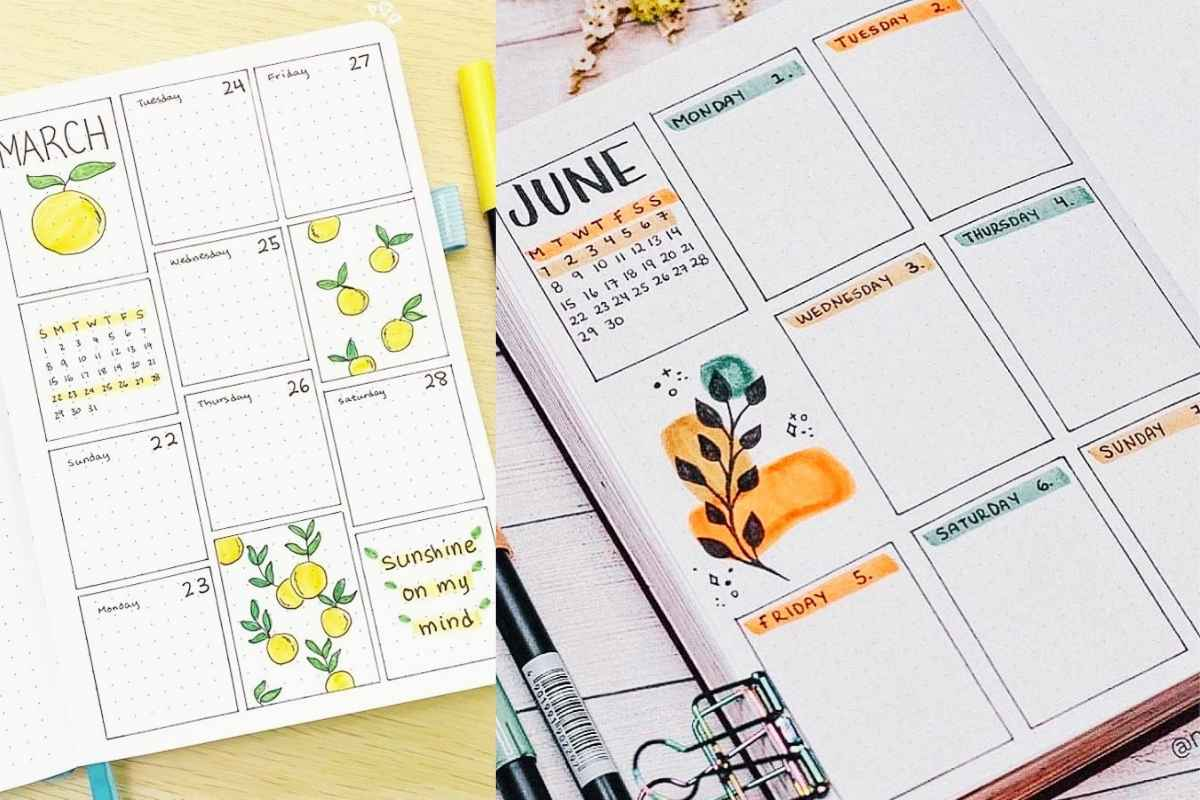
Staring at a blank journal page wondering where to even start?
You’re not alone. And honestly, that’s the exact feeling that made me fall in love with bullet journal weekly spreads.
The weekly spread is the heart of the whole BuJo system. It’s where your big monthly goals meet the small daily tasks that actually make them happen. It’s your working desk for the week — the place where real life gets organized.
Here’s the thing. There’s no single right way to do it.
In this post, I’m giving you a full overview of all the main types of bullet journal weekly spreads — minimalist, maximalist, habit tracker, hour blocking, and meal prep. I’ll also explain the one-page vs. two-page layout debate, so you can figure out what actually fits your life.
What Is a Bullet Journal Weekly Spread?
A bullet journal weekly spread is a dedicated section in your journal where you plan out an entire week at a glance. It lives between your monthly log (the big picture) and your daily log (the details). Think of it as the bridge.
Most spreads include space for each day of the week, a task list, and some kind of notes area. Beyond that? It’s completely up to you.
That flexibility is what makes the weekly spread so powerful — and sometimes overwhelming. So let’s break it down.
The Minimalist Weekly Spread
If you love clean lines and white space, this one is for you.
A minimalist bullet journal weekly spread keeps things simple on purpose. One column or row per day. A short task list. Maybe a small notes section. Black ink, no decoration, no fuss.
The biggest advantage is speed. You can set up a minimalist spread in under five minutes, which means you’ll actually do it every single week. It’s low-maintenance, easy to scan, and endlessly flexible.
This is one of the most searched weekly spread styles for a reason — it works for almost everyone.

By @The Creatives Hour
The Maximalist Weekly Spread
On the other side of the spectrum is the maximalist spread.
This one leans into bullet journaling as a creative outlet. We’re talking washi tape, hand-lettering, stickers, color-coded sections, illustrated headers, and decorative borders. It takes longer to set up, but for creative people, that setup time is part of the ritual.
A maximalist weekly spread turns your planner into something you genuinely enjoy opening. And when you enjoy opening it, you actually use it.

By @samijournals
The Habit Tracker Weekly Spread
Want to build better habits? Bring the tracker directly into your weekly layout.
A habit tracker weekly spread adds a small grid or checklist to your weekly view — one row per habit, one column per day. You track things like water intake, workouts, reading, or screen time right alongside your schedule.
Having it visible all week (instead of buried in a separate monthly tracker) is a game changer for consistency.

By @Steve & @Crazy Laura
The Hour Blocking Weekly Spread
If your days are back-to-back meetings, appointments, or classes, hour blocking is the layout that keeps everything from blurring together.
An hour blocking spread (also called time blocking) divides each day into hourly or half-hourly slots. You assign tasks and events to specific time windows instead of just listing them. It makes your day feel manageable and helps you spot exactly where your time is actually going.
This style works especially well for professionals, freelancers, and anyone who needs to protect their focus time.

By @By Amanda Kay
The Meal Prep Weekly Spread
This one is underrated and incredibly practical.
A meal prep weekly spread adds a dedicated section for planning your meals each day — breakfast, lunch, dinner, and snacks. Some versions include a shopping list column on the side. It connects your food planning directly to your weekly schedule, so you’re not standing in front of the fridge at 6pm wondering what to make.
If you’re trying to eat healthier, save money, or just reduce mental load, adding meal planning to your weekly spread is one of the easiest wins.

By @ jules barton
One Page vs. Two Page Weekly Spread
This is one of the most common questions I get.
A one-page weekly spread fits everything into a single journal page. It’s compact, efficient, and great for smaller journals or minimalist setups. The limitation is space — if you have a lot to track each day, things can get cramped.

By @Deborah Anne Sanderson & Masha Plans
A two-page weekly spread uses both pages of an open journal spread. You get more room to breathe — more space per day, room for a habit tracker, a notes section, a meal plan, or decorative elements. Most maximalist and specialized layouts use the two-page format.

By @pagesbyamy
Neither is better. It comes down to how much you track and what journal size you use.
So Which One Is Right for You?
The honest answer: start with the one that immediately felt right while reading this post.
You can always switch. Bullet journaling is supposed to evolve with you — not lock you into a system that stopped working six weeks ago.
Over the coming posts, I’ll go deep on each of these styles with examples, setup tips, and ideas for making them your own. Save this post to come back to as your starting point.
Whether you’re just starting out or reinventing your setup for the hundredth time, I’m right there with you every step of the way.
Until next time, Eden